
Essay #1
Essay #1: Pursuing Academic Retrieval
We live in an era of significant change. A glance at the current news cycle demonstrates the speed at which political, social, and technological factors are moving. For many this can understandably induce a sense of anxiety about the future. But if we take a step back for a moment, putting our time into historical perspective might provide us with some relief. We are not the only generation to live through rapidly changing times. Let’s take a step back and reflect on past technological breakthroughs for some examples.
The steam engine was slowly developed over the 18th and 19th centuries, resulting in the creation of the steam-powered locomotive in 1804.1 The ability to transport large amounts of supplies over extremely long distances changed the world. Up to that point land travel was much slower because it was dependent on weather and animals. Steam-powered trains changed that. These new capabilities paved the way for the Industrial Revolution and westward expansion in the United States.
Telegraph and radio are similar breakthroughs that were developed over the 19th century. Now communication between two parties could happen over distances that were previously not possible. Eventually a telegraph could be sent to someone that was hundreds of miles away. Radio quickly became just as good with the first transatlantic radio transmission being sent over a distance of 2,100 miles in December of 1901.2
A final example is one that is likely more familiar. In 1928, Dr Alexander Fleming made the crucial discovery of a type of mold on one of his petri dishes that was later purified and isolated to make penicillin, the world’s first organically produced antibiotic.3 Penicillin was not commercially available in mass quantities until 19414, but its utilization during the Second World War (1939-1945) and since then have saved hundreds of millions of lives. A list for the 21st century would include inventions like the iPhone, electric cars, CRISPR gene-editing technology, and artificial intelligence.
Change is a constant factor in human history. Recently technology has been the main catalyst in rapidly changing - and improving - the human experience. However, the speed at which these changes take place has definitely accelerated. Indeed, so much has happened in the 21st century that it can induce a kind of historical amnesia and lead us to believe these things have only happened to us. Our era can also lull us into assuming that every change is a good one.
Many - perhaps most - of the technological improvements we can think of are positive. But we would be wrong to assume that all progress is good progress. It doesn’t matter if we are talking about technology or something else. The bottom line is it’s possible to take one step forward and two steps back. It’s also possible to take two steps back and not a single step forward.
One place we have gone backwards is in education. It is no secret that the academic development of young people today is in serious jeopardy. Western nations have lost something important when it comes to how we teach and learn. The situation is so bad that it's unclear if Americans and Westerners are learning much at all.
Neuroscientist Dr Jared Cooney Horvath said that generation Z, the generation born between 1997 and 2012, is “the first generation in modern history to score lower on standardized academic tests than the one before it”5 and that generation Z “underperformed on basically every cognitive measure, from basic attention, memory, literacy, numeracy, executive function and general IQ”.5 To most people this probably isn't a surprise. In fact, many are sounding the alarm.
Dr Jonathan Heidt, an author and professor at the NYU Stern School of Business reports that a combination of factors - primarily high amounts of screen time - is leading to cognitive deficits in young people and causing other issues too such as ‘fragility’ among generation Z.6 This could be better described as having a general lack of courage or resilience and not possessing the ability to take risks. Dr Haidt has spent considerable time addressing this and even formulated legal policy to tackle the problem head on. I would like to add to this discussion and present my own solutions.
We can begin solving this problem by recovering an old form of educational training known as Scholasticism. Scholasticism is a system of education that was developed in the Middle Ages, specifically the High Middle Ages. This is just a fancy way of saying that it was developed in the middle of the one-thousand year period that historians refer to as the Middle Ages, or the medieval era.
There is some debate as to when exactly the medieval period began and ended but general consensus among historians is this timeline starts in 476 AD when the Western Roman Empire falls to German barbarians and ends in 1453 AD when the Eastern Roman Empire falls to Ottoman Turks.7
In referencing the High Middle Ages, we are referring to the years of roughly 1000-1400. It was during this time that Scholasticism was introduced as a formal system of education, rose immensely in popularity, and then fell out of style. Much more could be said about this and will be said about it in future posts; but three important points should be made here.
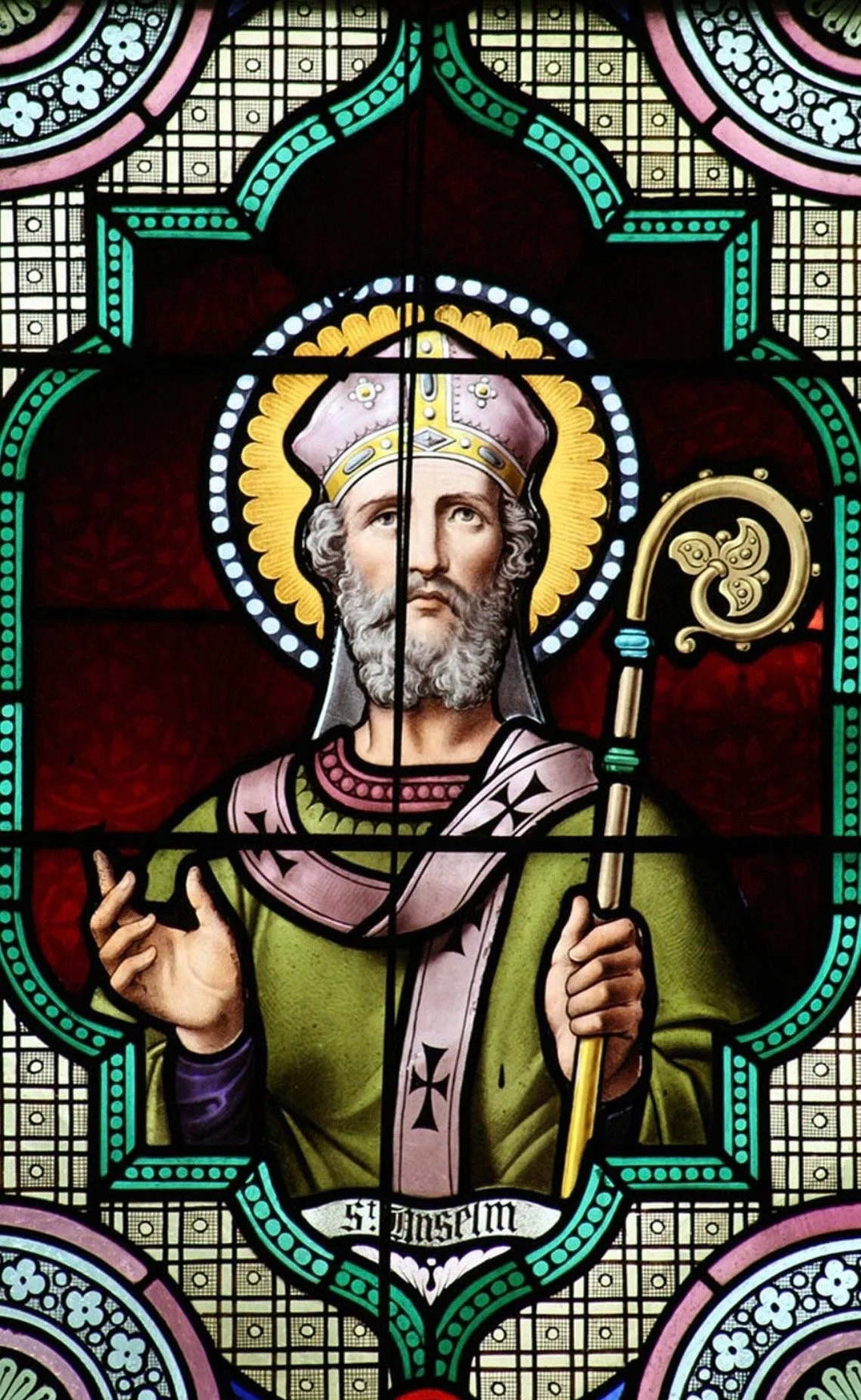
Scholasticism was largely developed by the Catholic theologian Anselm of Canterbury (1033-1109) who was the Archbishop of Canterbury in England from 1093-1109 AD. He is largely responsible for the foundations of Scholasticism.8 His writings laid the intellectual groundwork for it. Future theologians would take his ideas and improve on them.
One of his famous quotations is the phrase “fides quaerens intellectum” in Latin, or in English “faith seeking understanding”.8 His basic point is that faith in God and reason are not contradictory. On the contrary, faith in God is what allows us to understand who God is. It is also the first step to understanding everything else. Faith in God enables one to understand the created order. Dr Matthew Barrett aptly summarizes Scholasticism:
“The Scholastics considered the Christian faith logical and capable of consistency, even concord. That belief, and the task it proposed, required a Scholastic method dedicated to logical rigor that could aid students in the study of sacred Scripture as well as historical texts. Scholastics posed questions, entertained false answers, then refuted error by positing anywhere between two and ten theses in response, only to answer the strongest objections.”9
Overall, Anselm’s point is that faith in God is not contradictory to reason, but complimentary.
Thomas Aquinas (1225-1274) - also known as the “angelic doctor” - took the foundations of Scholasticism and advanced it into a formal method of learning that was systematized in his still-famous Summa Theologica.10
He made similar statements about faith and reason but wrote much more extensively on these topics than Anselm. His Summa is a clear example of Scholasticism at its best because it contains a very structured system of logical reasoning to answer a variety of theological questions. Many of these topics are discussed in the form of questions and answers, like a teacher answering a student. This is a very incomplete explanation of Scholasticism but the main point is that it blended Christian religious devotion with intense academic inquiry and ended up paying big dividends.
The medieval university system came into existence through a variety of factors between the eleventh and fourteenth centuries with scholastic theologians playing a major role in their development. Some of the most prestigious universities today such as Oxford and the University of Paris are indebted to their legacy.11 The rich academic heritage of scholasticism is proof that better methods of learning exist.
Scholasticism stands in opposition to one modern form of education which can be described as credentialism. One source offers a succinct description:
“Credentialism refers to the practice of requiring educational credentials as a prerequisite for employment or social status without a corresponding emphasis on a person's actual skills, qualifications, or abilities. This phenomenon has grown alongside the increase in technology- and information-based jobs in the twenty-first century. While there are valid cases where credentials align with job requirements—such as the need for a medical degree to practice medicine—there are numerous instances where the requirement for specific credentials serves to exclude otherwise qualified individuals based solely on their educational background”.12
The main issue with credentialism is that it prevents people from becoming well-rounded individuals. This is arguably its biggest weakness. The emphasis on hyper-specialized forms of education is that it is done at the expense of learning deeply about anything else. One becomes an expert in a narrow area of study but is completely ignorant everywhere else. This stunts the maturation and character development of adolescents as they grow into adulthood.
Opposing visions of credentialism are not only scholasticism but another traditional philosophy of education known as liberal education. Here is one helpful description:
“Liberal education is an academic approach that emphasizes a broad-based curriculum, integrating studies across various disciplines such as the arts, humanities, social sciences, and natural sciences. This educational philosophy aims to foster critical thinking, enabling students to analyze information, recognize biases, and question established norms. Courses outside a student’s major are required to cultivate well-rounded individuals capable of viewing issues from multiple perspectives, a concept championed by philosopher John Stuart Mill as "many-sidedness.”13
Retrieving the Scholastic Method isn’t a magic bullet for every problem today but it is the first step in getting back on the right track. In education it will look like reintroducing this methodology in schools to help people develop sharper thinking skills. For undergraduate and graduate students it could be literally learning what the scholastic method is by studying the primary sources and digging into Christian theology and church history.
If you aren’t in school anymore there are still ways to apply the broader concepts of scholasticism to your daily life. Personally committing ourselves to it can look very simple. Reading in a silent room so you can focus; taking long walks to decompress your mind; reducing screen time on smartphones; seeing your friends more; reading slowly for quality not quantity.
These examples illustrate what applying the philosophy of scholasticism can look like on a day-to-day basis. I believe scholastic renewal is like a hidden diamond. It’s not a secret plan or a classified government document. But it is hidden in the sense that almost nobody knows what it is.
I think many of the problems we face today can be addressed by implementing the concepts of scholasticism. If we take this courageous step forward we will be expressing our own humility too. It is a recognition that our ancestors, though they are long dead, still have something to teach us. It will be a journey into the old ways and “sometimes the old ways are best”.14
I hope that by reading this, you have become inspired to join me and undertake a personal journey of scholastic renewal. Let’s commit to this and see how far we can go.
References
Rolt, L. (2026, April 18). Richard Trevithick. Encyclopedia Britannica. https://www.britannica.com/biography/Richard-Trevithick
First Transatlantic Telegraphic Radio Transmission: History: Research Starters: Ebscohost. EBSCO. (2021). https://www.ebsco.com/research-starters/history/first-transatlantic-telegraphic-radio-transmission/#full-article
Discovery and Development of Penicillin. American Chemical Society. (n.d.). https://www.acs.org/education/whatischemistry/landmarks/flemingpenicillin.html
Britannica Editors (2026, September 8). penicillin. Encyclopedia Britannica. https://www.britannica.com/science/penicillin
Erickson, J. (2026, February 7). Gen Z - the first generation officially dubbed Dumber than the last. New York Post. https://nypost.com/2026/02/07/us-news/gen-z-the-first-generation-officially-dubbed-dumber-than-the-last/
Varadarajan, T. (2022, December 30). Jonathan Haidt on the ‘National Crisis’ of Gen Z. https://www.wsj.com/articles/the-national-crisis-of-generation-z-jonathan-haidt-social-media-performance-anxiety-fragility-gap-childhood-11672401345
Britannica Editors (2026, September 12). Middle Ages. Encyclopedia Britannica. https://www.britannica.com/event/Middle-Ages
Barrett, M. (2023). Reformation as Renewal: Retrieving the One Holy, Catholic, and Apostolic Church. Zondervan Academic. Page 77.
Barrett, M. (2023). Reformation as Renewal: Retrieving the One Holy, Catholic, and Apostolic Church. Zondervan Academic. Page 79.
Castaldy, D. (2021). Summa Theologica by Thomas Aquinas: History: Research starters: Ebscohost. EBSCO. https://www.ebsco.com/research-starters/history/summa-theologica-thomas-aquinas/
Pieper, J. (2024, March 19). Scholasticism. Encyclopedia Britannica. https://www.britannica.com/topic/Scholasticism
Wienclaw, R. (2019). Credentialism: Social Sciences and Humanities: Research Starters: Ebscohost. EBSCO. https://www.ebsco.com/research-starters/social-sciences-and-humanities/credentialism/
Butts, R. (2017). Liberal Education: History: Research Starters: Ebscohost. EBSCO. https://www.ebsco.com/research-starters/history/liberal-education/
Mendes, S., Purvis, N., Wade, R., Logan, J., Wilson, M. G., Broccoli, B., Craig, D., Bardem, J., Fiennes, R., Harris, N., Finney, A., Dench, J., Newman, T., & Fleming, I. (2013). Skyfall. 20th Century Fox Home Entertainment : MGM Home Entertainment.
Essay 1: Pursuing Academic Retrieval
We live in an era of significant change. A casual glance at the current news cycle demonstrates the speed at which political, social, and technological factors are moving. For many this can understandably induce a sense of anxiety about the future. But if we take a step back for a moment, putting our time into historical perspective might provide us with some relief. We are not the only generation to live through unprecedented times. Let’s look to the past for examples.
The steam engine was slowly developed over the 18th and 19th centuries, resulting in the creation of the steam-powered locomotive in 1804.(1) The ability to transport large amounts of supplies over extremely long distances changed the world. Up to that point land travel was much slower because it was dependent on weather and animals. Steam-powered trains changed that. These new capabilities paved the way for the Industrial Revolution and westward expansion in the United States.
Telegraph and radio are similar breakthroughs that were developed over the 19th century. Now communication between two parties could happen over distances that were previously not possible. Eventually a telegraph could be sent to someone that was hundreds of miles away. Radio quickly became just as good with the first transatlantic radio transmission being sent over a distance of 2,100 miles in December of 1901.(2)
A final example is one that is likely more familiar. In 1928, Dr Alexander Fleming made the crucial discovery of a type of mold on one of his petri dishes that was later purified and isolated to make penicillin, the world’s first organically produced antibiotic.(3) Penicillin was not commercially available in mass quantities until 1941(4), but its utilization during the Second World War (1939-1945) and since then have saved hundreds of millions of lives. A list for the 21st century would include inventions like the iPhone, electric cars, CRISPR gene-editing technology, and artificial intelligence.
Change is a constant factor in human history. Recently technology has been the main catalyst in rapidly changing - and improving - the human experience. However, the speed at which these changes take place has definitely accelerated. Indeed, so much has happened in the 21st century that it can induce a kind of historical amnesia and lead us to believe these things have only happened to us. Our era can also lull us into assuming that every change is a good one.
Many - perhaps most - of the technological improvements we can think of are positive. But we would be wrong to assume that all progress is good progress. It doesn’t matter if we are talking about technology or something else. The bottom line is it’s possible to take one step forward and two steps back. It’s also possible to take two steps back and not a single step forward.
One place we have gone backwards is in education. I don’t just mean in a school setting, but in general. Western nations have lost something important when it comes to how we learn. The situation is so bad that it's unclear if Americans and Westerners are learning much at all.
It is no secret that the academic development of young people today is in serious jeopardy. Neuroscientist Dr Jared Cooney Horvath said that generation Z, the generation born between 1997 and 2012, is “the first generation in modern history to score lower on standardized academic tests than the one before it”(5) and that generation Z “underperformed on basically every cognitive measure, from basic attention, memory, literacy, numeracy, executive function and general IQ”.(5) To most people this probably isn't a surprise. In fact, many are sounding the alarm.
Dr Jonathan Heidt, an author and professor at the NYU Stern School of Business reports that a combination of factors - primarily high amounts of screen time - is leading to cognitive deficits in young people and causing other issues too such as ‘fragility’ among generation Z.(6) This could be better described as having a general lack of courage or resilience and not possessing the ability to take risks. Dr Haidt has spent considerable time addressing this and even formulated legal policy to tackle the problem head on. I would like to add further to this discussion and present some of my own solutions.
We can begin solving this problem by recovering an old form of educational training known as Scholasticism. Scholasticism is a system of education that was developed in the Middle Ages, specifically the High Middle Ages. This is just a fancy way of saying that it was developed in the middle of the one thousand year period that historians refer to as the Middle Ages. There is some debate as to when exactly the medieval period ended but general consensus among historians is this timeline starts in 476 AD when the Western Roman Empire falls to German barbarians and ends in 1453 AD when the Eastern Roman Empire falls to Ottoman Turks.(7)
In referencing the High Middle Ages, we are referring to the years of roughly 1000-1500. It was during this time that Scholasticism was introduced as a formal system of education, rose immensely in popularity, and then fell out of style. Much more could be said about this and will be said about it in future posts; but three important points should be made here.
Scholasticism was largely developed by the Catholic theologian Anselm of Canterbury (1033-1009) who was the Archbishop of Canterbury in England from 1093-1109 AD. He is largely responsible for the foundations of Scholasticism(8) His writings laid the intellectual groundwork for it. Future theologians would take his ideas and improve on them in the future.
One of his famous quotations is the phrase “fides quaerens intellectum” in Latin, or in English “faith seeking understanding”.(8) His basic point is that faith in God and reason are not contradictory. On the contrary, faith in God is what allows us to understand who God is. It is also the first step to understanding everything else. Faith in God enables one to understand the created order. Dr Matthew Barrett aptly summarizes Scholasticism:
“The Scholastics considered the Christian faith logical and capable of consistency, even concord. That belief, and the task it proposed, required a Scholastic method dedicated to logical rigor that could aid students in the study of sacred Scripture as well as historical texts. Scholastics posed questions, entertained false answers, then refuted error by positing anywhere between two and ten theses in response, only to answer the strongest objections.”(9)
Overall, Anselm’s point is that faith in God is not contradictory to reason, but inherently complimentary.
Thomas Aquinas (1225-1274) - also known as the “angelic doctor” - took the foundations of Scholasticism and advanced it into a formal method of learning that was systematized in his still-famous Summa Theologica.(10)
He made similar statements about faith and reason but wrote much more extensively on these topics than Anselm. His Summa is a clear example of Scholasticism at its best because it contains a very structured system of logical reasoning to answer a variety of theological questions. Many of these topics are discussed in the form of questions and answers, like a teacher answering a student. This is a very incomplete explanation of Scholasticism but the main point is that it blended Christian religious devotion with intense academic inquiry and paid big dividends.
The medieval university system came into existence through a variety of factors between the eleventh and fourteenth centuries with scholastic theologians playing a major role in their development. Some of the most prestigious universities today such as Oxford and the University of Paris are indebted to their legacy.(11) The rich academic heritage of scholasticism is proof that better methods of learning exist.
Scholasticism stands in opposition to one modern form of education which can be described as credentialism. One source offers a succinct description:
“Credentialism refers to the practice of requiring educational credentials as a prerequisite for employment or social status without a corresponding emphasis on a person's actual skills, qualifications, or abilities. This phenomenon has grown alongside the increase in technology- and information-based jobs in the twenty-first century. While there are valid cases where credentials align with job requirements—such as the need for a medical degree to practice medicine—there are numerous instances where the requirement for specific credentials serves to exclude otherwise qualified individuals based solely on their educational background”.(12)
The main issue with credentialism is that it prevents people from becoming well-rounded individuals. This is arguably its biggest weakness. The emphasis on hyper-specialized forms of education is that it is done at the expense of learning deeply about anything else. One becomes an expert in a narrow area of study but is completely ignorant in other important areas. This stunts the maturation and character development of adolescents as they grow into adulthood.
Opposing visions of credentialism are not only scholasticism but another traditional philosophy of education known as liberal education. Here is one helpful description:
“Liberal education is an academic approach that emphasizes a broad-based curriculum, integrating studies across various disciplines such as the arts, humanities, social sciences, and natural sciences. This educational philosophy aims to foster critical thinking, enabling students to analyze information, recognize biases, and question established norms. Courses outside a student’s major are required to cultivate well-rounded individuals capable of viewing issues from multiple perspectives, a concept championed by philosopher John Stuart Mill as "many-sidedness.”(13)
Retrieving the Scholastic Method isn’t a magic bullet for every problem today but it is the first step in getting back on the right track. In education it will look like reintroducing this methodology in schools to help people develop sharper thinking skills. For undergraduate and graduate students it could be literally learning what the scholastic method is by studying the primary sources and digging into Christian theology and church history.
If you aren’t in school anymore there are still ways to apply the broader concepts of scholasticism to your daily life. Personally committing ourselves to it can look very simple. Reading in a silent room so you can focus; taking long walks to decompress your mind; reducing screen time on smartphones; seeing your friends more; reading slowly for quality not quantity.
These examples illustrate what applying the philosophy of scholasticism can look like on a day-to-day basis. I believe scholastic renewal is like a hidden diamond. It’s not a secret plan nor is it a classified government document. But it is hidden in the sense that almost nobody knows what it is.
I think many of the problems we face today can be addressed by implementing the concepts of scholasticism. If we take this courageous step forward we will be expressing our own humility too. It is a recognition that our ancestors, though they have been long dead, still have something to teach us. It will be a journey into the old ways and sometimes the old ways are best.(14)
I hope by reading this you have become inspired to undertake a personal journey of scholastic renewal. Let’s commit to it and see how far we can go.
References
Rolt, L. (2026, April 18). Richard Trevithick. Encyclopedia Britannica. https://www.britannica.com/biography/Richard-Trevithick
First Transatlantic Telegraphic Radio Transmission: History: Research Starters: Ebscohost. EBSCO. (2021). https://www.ebsco.com/research-starters/history/first-transatlantic-telegraphic-radio-transmission/#full-article
Discovery and Development of Penicillin. American Chemical Society. (n.d.). https://www.acs.org/education/whatischemistry/landmarks/flemingpenicillin.html
Britannica Editors (2026, September 8). penicillin. Encyclopedia Britannica. https://www.britannica.com/science/penicillin
Erickson, J. (2026, February 7). Gen Z - the first generation officially dubbed Dumber than the last. New York Post. https://nypost.com/2026/02/07/us-news/gen-z-the-first-generation-officially-dubbed-dumber-than-the-last/
Varadarajan, T. (2022, December 30). Jonathan Haidt on the ‘National Crisis’ of Gen Z. https://www.wsj.com/articles/the-national-crisis-of-generation-z-jonathan-haidt-social-media-performance-anxiety-fragility-gap-childhood-11672401345
Britannica Editors (2026, September 12). Middle Ages. Encyclopedia Britannica. https://www.britannica.com/event/Middle-Ages
Barrett, M. (2023). Reformation as Renewal: Retrieving the One Holy, Catholic, and Apostolic Church. Zondervan Academic. Page 77.
Barrett, M. (2023). Reformation as Renewal: Retrieving the One Holy, Catholic, and Apostolic Church. Zondervan Academic. Page 79.
Castaldy, D. (2021). Summa Theologica by Thomas Aquinas: History: Research starters: Ebscohost. EBSCO. https://www.ebsco.com/research-starters/history/summa-theologica-thomas-aquinas/
Pieper, J. (2024, March 19). Scholasticism. Encyclopedia Britannica. https://www.britannica.com/topic/Scholasticism
Wienclaw, R. (2019). Credentialism: Social Sciences and Humanities: Research Starters: Ebscohost. EBSCO. https://www.ebsco.com/research-starters/social-sciences-and-humanities/credentialism/
Butts, R. (2017). Liberal Education: History: Research Starters: Ebscohost. EBSCO. https://www.ebsco.com/research-starters/history/liberal-education/
Mendes, S., Purvis, N., Wade, R., Logan, J., Wilson, M. G., Broccoli, B., Craig, D., Bardem, J., Fiennes, R., Harris, N., Finney, A., Dench, J., Newman, T., & Fleming, I. (2013). Skyfall. 20th Century Fox Home Entertainment : MGM Home Entertainment.
Why Scholastic Renewal?
Hello everyone! My name is Matthew Striegel. If you’re reading this, I’m glad you’re here.
This project is the result of eight years of study that began in October 2018. During that time as an undergraduate student I stumbled into the extensive world of Christian theology, Greek philosophy, and the broad intellectual heritage of Western civilization. I took advantage of my time and seized on the opportunity of reading some of the best literary works the world has to offer. The result of that labor is Scholastic Renewal.
Scholastic Renewal is a research institute and art curation company that is designed to collect important books so they can be studied afresh to gather original insights. By learning from the best minds of the past, we can become wise and live better lives. In addition to collecting books, Scholastic Renewal will act as a curation company to fund the creation of new pieces of artwork. This dual approach of book preservation and art creation will complement one another nicely.
Book collecting and preservation will be done for conducting new research projects which will be released in the form of articles, essays, and videos. In time, this will lead to the publication of new books. The commissioning of new artwork will be for bringing back to life the ‘academic’ and ‘realist’ style of art that reached its peak popularity in the mid-nineteenth century.
As a final goal Scholastic Renewal will host dinners, galas, and fundraisers to celebrate key achievements of the organization. These social events will achieve two functions. First, they will act as a way for supporters to make new connections and establish new friendships. Second, they will fund future projects, primarily the commissioning of new art.
I am so happy you are joining me on this journey. Stick around for my first article, which will be coming out in just a few days. Cheers!